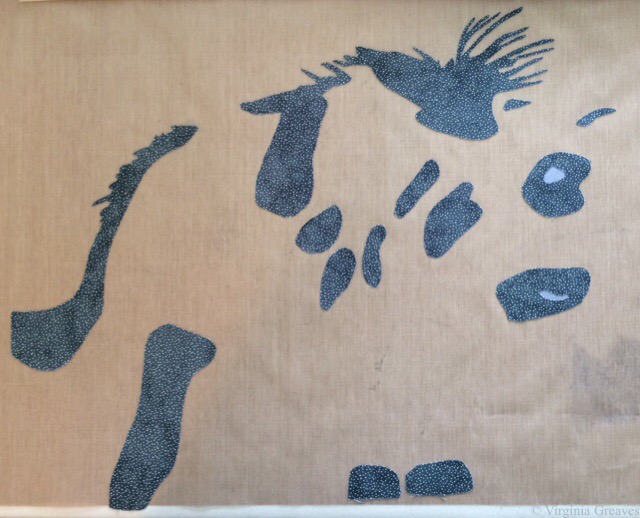
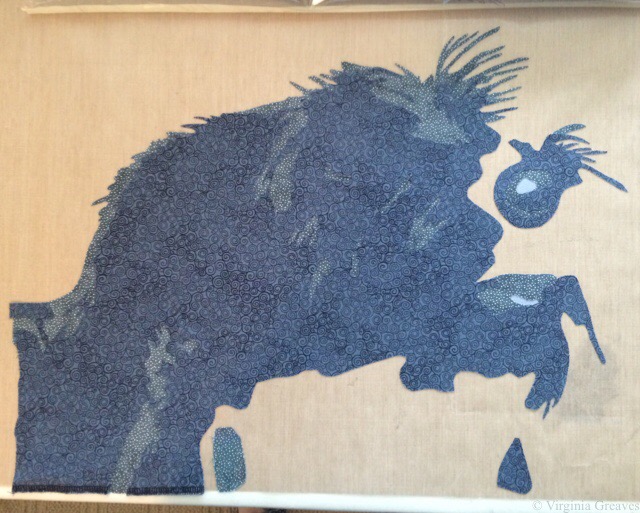
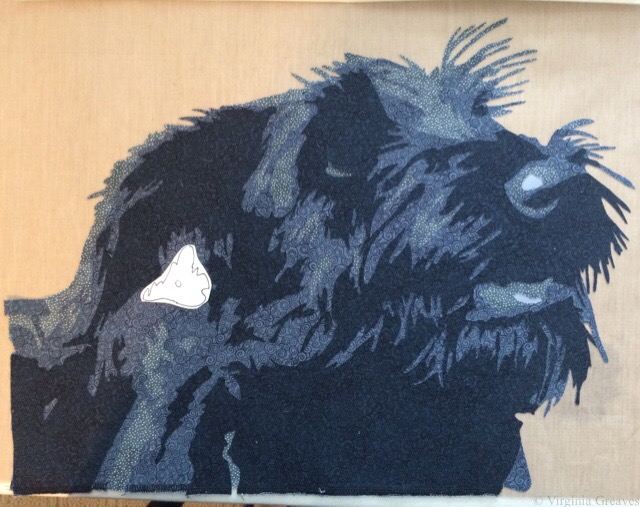
November 13, 2009

5×7 Is Really Small

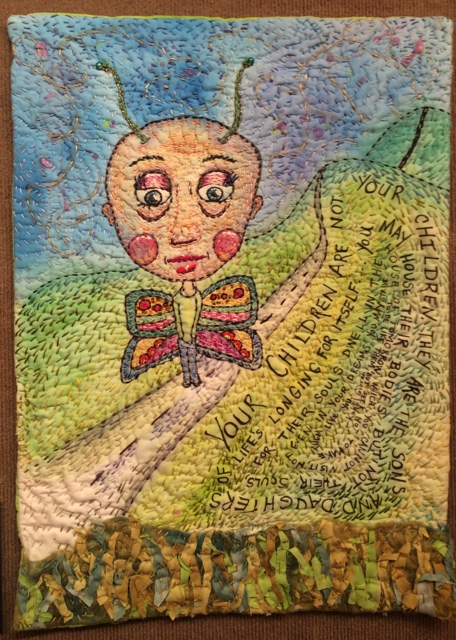
My Fiber Art Fusion group has a holiday exchange in December of a 5″ x 7″ piece of art — which sounds really easy — probably won’t take a lot of time. But actually, I find it much harder to work small. When you’re used to working in a particular scale, going far from that can really throw you.

Which is to say that my first piece totally bombed. I tried to do a 4 value beach scene in black & white — three people in the surf with their backs to the viewer. I think that it is a good idea for a piece — but it really needs to be larger. Lower the # of values was not enough to make this simple. First there were too many really small pieces needed to evoke the surf — and second, all of the fabric prints had to be really small scale for it to work. I thought I had a handle on that — but I wasn’t thinking small enough. At some point I realized that I was at a point of diminishing returns and I stopped.

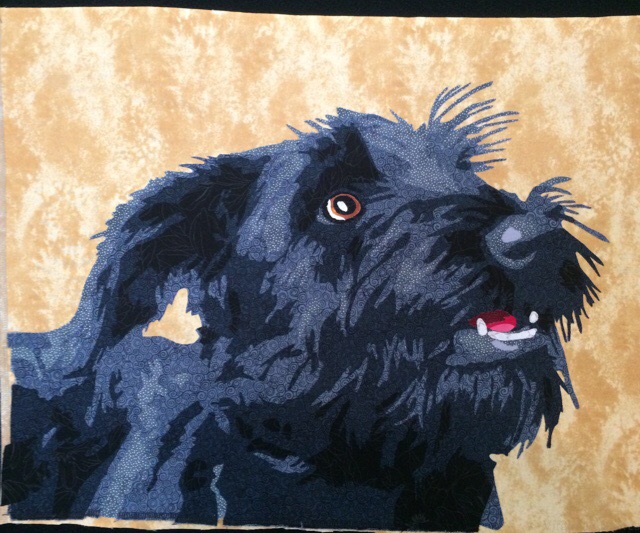
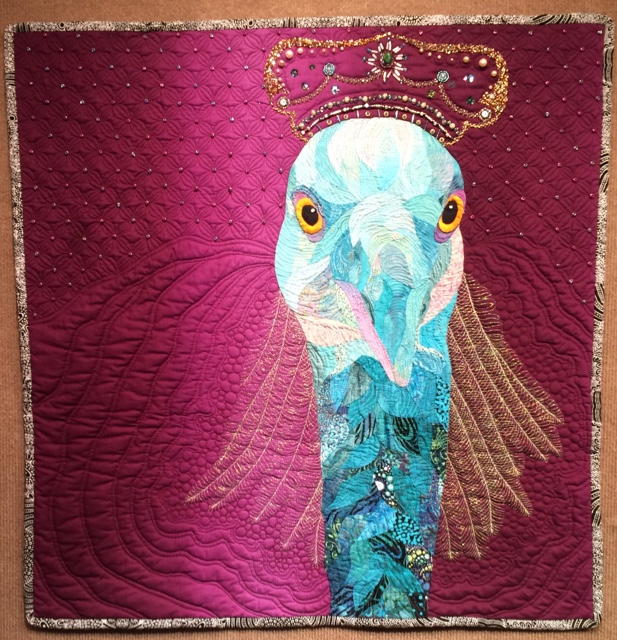
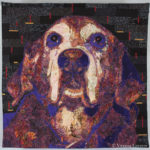
At this point, I thought about just doing an eye — it is a shape I’m familiar with and enjoy doing and its creation would help me grow in my work by concentrating on one small yet very important part of portraits.

eyeknow

It’s made me think that I should spend some more time studying just the eye. It is done differently than in my portraits and although simplified, I like the broader use of color. I may spend the time from now until the holidays working on small eye studies.

November 4, 2009

How to Quilt a Face

When it comes time for me to quilt, I usually have a fear of starting. Most people don’t quilt the face at all — but my entire quilt is a portrait and I have no choice but to quilt it. And let’s face it — the trend at shows is close quilting. I have tried sparsely quilting faces — and the judges don’t like it. I’m not saying that you have to make your choices based on what the latest trends are, but I do think that judges are following the trendsetters when they are judging & jurying — and close quilting has become the norm. (Stitch regulators too — but I won’t even go there. I don’t personally care too much about stitch length — I’m creating art not a bed quilt. I guess this is where I draw my line.)

The easiest thing for me is to take a black & white picture of the model, grab & pencil, and start drawing away. I can erase anything I don’t like — it isn’t permanent & doesn’t involve ripping out stitches. I do try to follow what I consider to be the contours of the face so that the quilting itself will give dimension to the face. I follow the contours of the applique sometimes — and completely ignore them at other times. There are no rules — just my imagination.

quiltingsketch1

quiltingsketch2

quiltingsketch3

I show three pictures to give you an idea of how I might change things depending on the pose — or what things are more similar. To be honest, I have found it easier to take out previous photographs and see what I have done before I start. I have also found it easier to do something else while I draw on the photo — like talk on the phone. I tend to be more creative that way & not as likely to second guess everything I do.

I used to transfer most of my lines to the actual quilt before starting using a blue or white erasing pen. Now I transfer very few lines — only a few guidelines as I go — and the forehead which is generally based on the applique of the lightest color. If I quilt from the outside in, I get a big poofiness in the middle (ask me how I know) — so it is generally just easier to draw it out & then quilt on the lines.

I quilt about 1/4 inch apart so poofiness can be a big issue. I pin the whole quilt before I start & try to quilt from the inside out as much as possible. When I get to the outer borders of the head, I’ve pushed quite a bit of fabric out to the edges — so I’ve learned the hard way not to outline the head first — save that for last. I also tend to smooth out the fabric in the background & move my pins to accommodate the moving poof — pushing it out to the edges — before I start quilting that area.

There is stretch that goes on when you quilt that close — both in the top and the batting. I use the 70/30 Quilter’s Dream batting. There is a scrim side I used to always face to the back because it has some cotton imperfections — but one day I made a mistake & put it scrim side up facing the top — and I’ve had a lot less waviness when I’m done quilting since then. I’m sure there is a rule somewhere about scrim up or down that I’ve never heard. But this is what works for me.

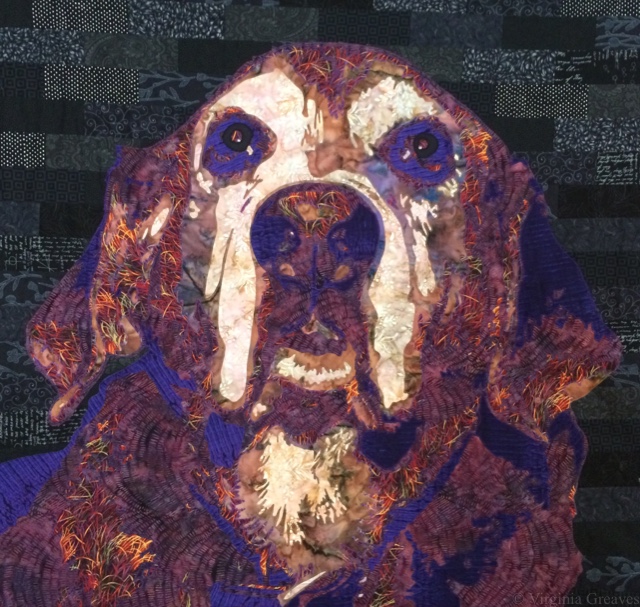
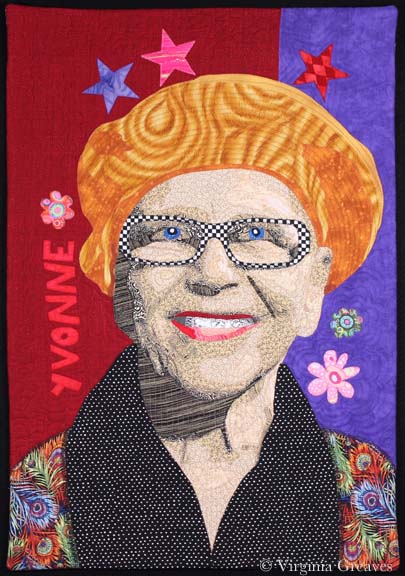
I have finished this one — decided to name it Duodecim which is latin for twelve. I’ve always thought this was the perfect age and have always felt that age in my heart. This is the final pic but there are more detail shots on my website here.

duodecim

October 15, 2009

What To Do When You’re Not in Houston at Festival

The International Quilt Festival is going on this week in Houston. I was lucky to have two quilts juried into their World of Beauty exhibit this year, Adelpho and Unconditional. Unfortunately, I will not get to see them hanging. My quilts travel more than I do. When my husband retires and the children are grown and gone, I hope to go to more shows.

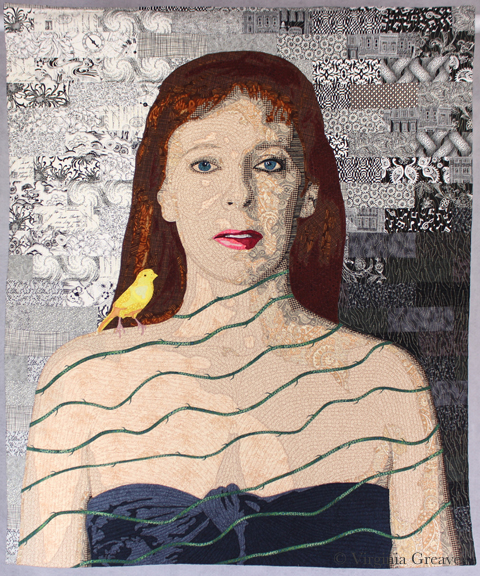
I also had two quilts recently in the East Cobb Quilt Guild: Georgia Celebrates Quilts biannual show here in Atlanta, Sweet Dreams and Shoshanna. Shoshanna won Judge’s Recognition and 2nd Place in the Original Design category.

(Interesting side note — I took my friend that modeled Shoshanna to the show so that she could see it hanging. After the show, I had several quilters tell me that they had seen the woman at the show that looked like the quilt, and I of course assumed that they were talking about my model. Then I received several emails from a woman that had gone to the show earlier in the day and looks a lot like the quilt and hence the model. This is the first time I’ve had this happen. Unfortunately, the visitor to the show really wanted to meet the model, but I couldn’t violate my friend’s privacy.)

As this has been a banner year for me to be in shows (which makes up for only being in one show last year), I am also honored to have two quilts in the Art Quilts XIV: Significant Stitching show at the Chandler Center for the Arts in Chandler, AZ starting in November. Sweet Dreams will travel as will Chameleon.

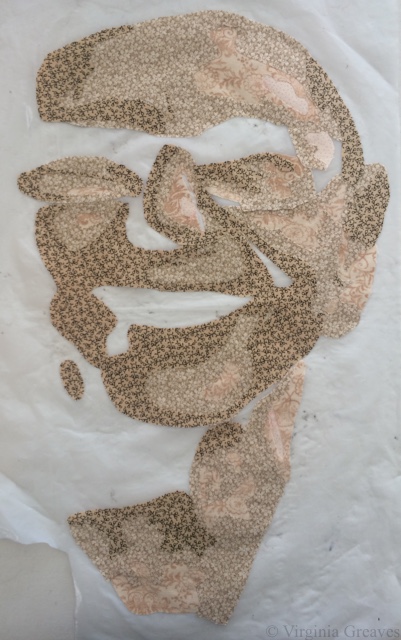
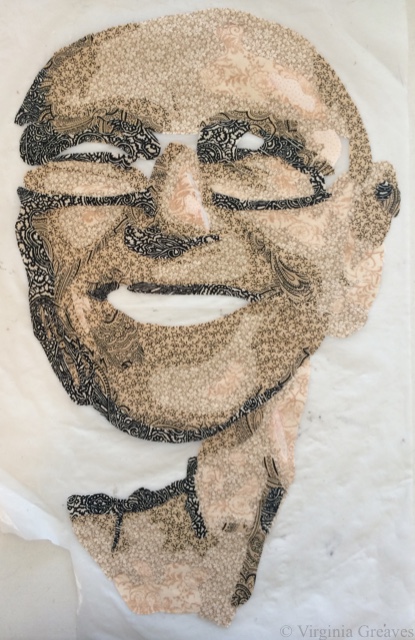
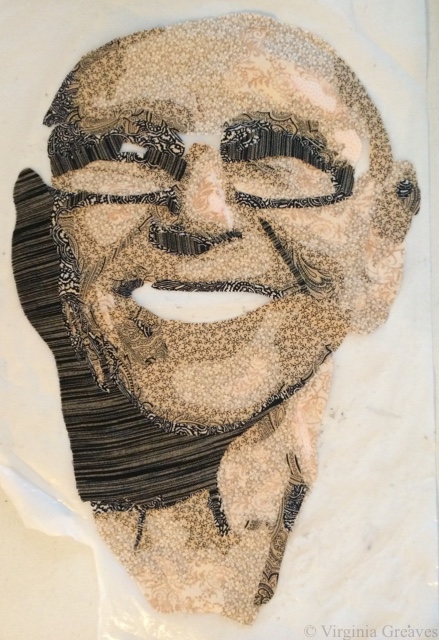
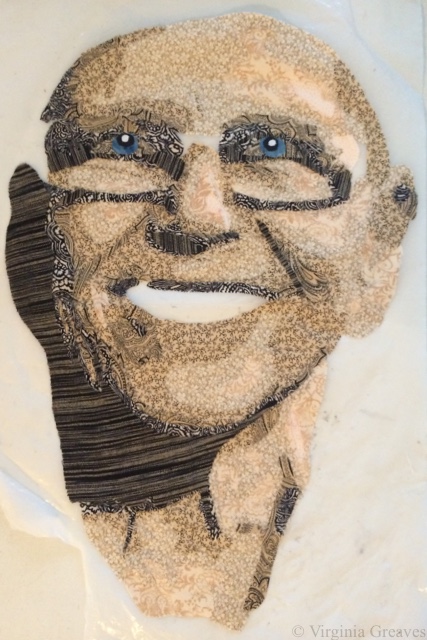
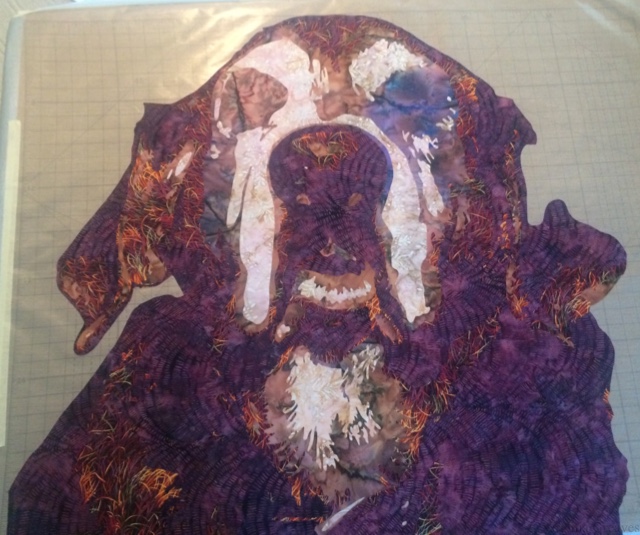
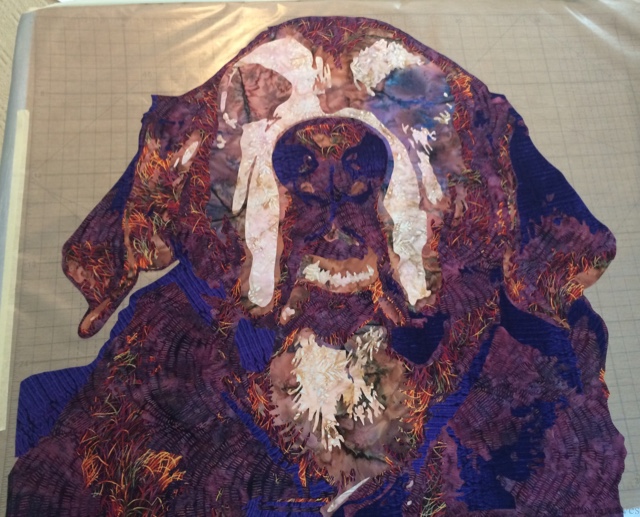
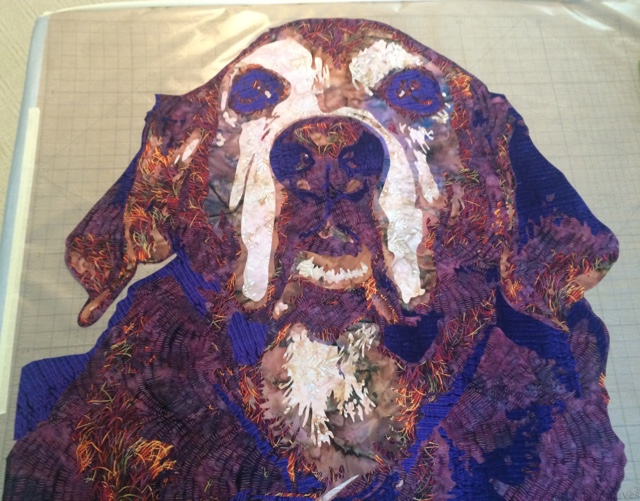
Enough about me. I haven’t posted in a month and although family obligations keep trying to derail me, I have actually made some progress on a new piece. I’ve been taking a lot of pictures and I’m getting ready to quilt it, but since I’m procrastinating, I thought that I would show you the development of the face. (Keep in mind that all of the pictures except the last two were taken of the piece on a high table — and I’m a short woman — so there is some distortion in the features.)

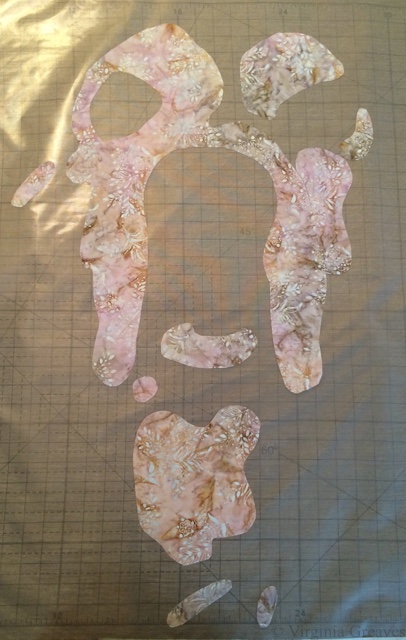
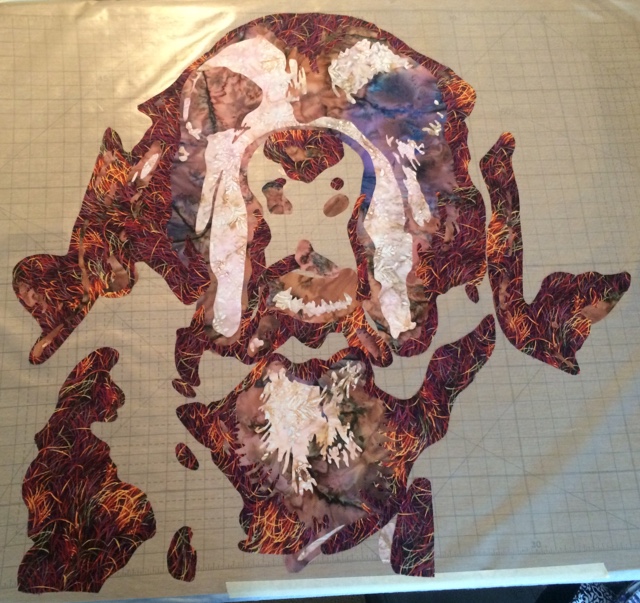
This is all about layering values. I always (well I do now anyway) start with the lightest value in the face. In one quilt, I used the 2nd value first — and had show through which drove me nuts — so unless the piece of fabric is fairly small, I put down the values from lightest to darkest (which, by the way, is the opposite of how Deidre Scherer does her faces, but she free-hand cuts everything).

applique1

The 2nd value for the face is a bold choice — I admit it. I was pushing the limits of what I thought I could get away with. It is a paisley with tan, stone, and orange in it. There are even some hints at white. I had actually bought this for another quilt & didn’t use it — but the subject in this one is more carefree so I thought I might be able to pull it off.

applique2

applique3

The next value is a tan and blue stripe — but it is more tan than blue so I knew it would work for shading. I worked so hard to make the stripes vertical — and when I was done I wished that I had placed them on an angle. Maybe next time.

applique4

The next value is a little harder to see in this picture — but it is a tan with a small blue floral print. Again — it works for shading.

applique5

The next value — I’m really pushing what I can find in values — is a small stone and black paisley print — very busy. The stone is too light but I figured that the density of the black will overcome this flaw.

applique6

The last value for the face was found in my brown drawer of fabrics. It is a dark taupe with black and helps to outline the eye and the eyebrows.

applique7

Here you see that I have not added the eyebrows — I got distracted & started working on the eyes. I originally chose a gray blue for the pupils which you will see later I had to change.

applique8

Here are both eyes with the eyebrows.

applique9

The crowning touch is of course the mouth. It has a red border which signifies the inner edge of the mouth — and the mouth itself with the teeth are constructed from values of white — and by that I mean from white to gray using prints with varying densities of pattern to vary the value. (I do admit that I straightened the teeth of the model. My mom, an oil painter that has done a few portraits, agrees with me that most models like their features to be represented as better than they truly are — regardless of what the mirror tells them.)

applique10

At this point, I start on the hair. This is the first value of brown.

applique11

This is the 2nd value — not coming together yet.

applique12

The 3rd value is where most of her hair starts to come together.

applique13

This shows the 4th value of hair.

applique14

This is the final applique before I start adding the background. I have added some black in the hair — and the eyes need to be changed. The color isn’t strong enough — and they need more work.

applique_final

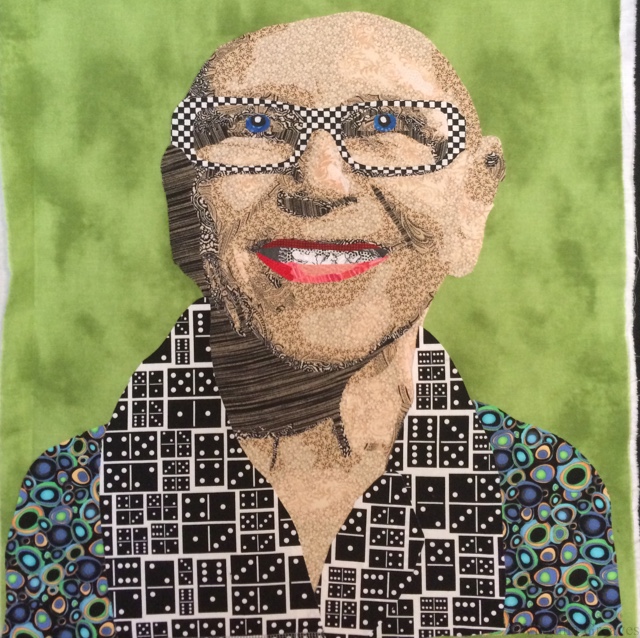
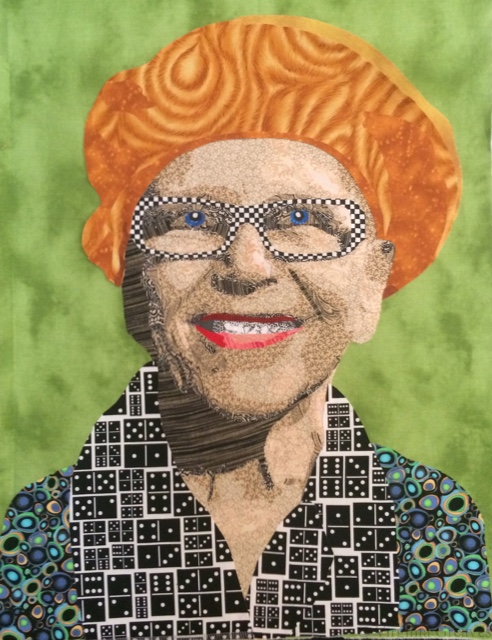
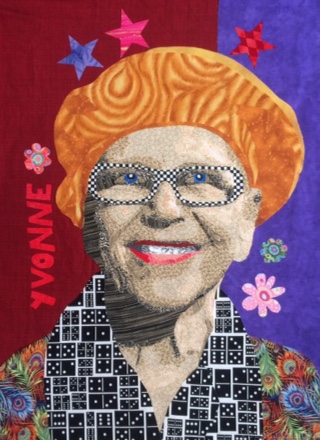
Here I have changed the eyes to a stronger color — a green/blue which is actually the back of the fabric used in the background on the left side of the picture. I had a really hard time with a background for this piece. You want it to support but not detract from the piece — or call too much attention to itself. Again, the fabric I used for the T-shirt is a bold choice, but I wanted something playful to represent the youth of the model. I drove all over town (aren’t I lucky to finally live in a place that has a bunch of fabric stores?) and couldn’t find anything for the background other than the T-shirt fabric. I ended up pulling 2 fabrics — one from my green drawer and one from my blue drawer — which just goes to show that you should never limit yourself by how you or someone else has classified the fabric.

beforequilting

September 17, 2009

Exhibit Visit

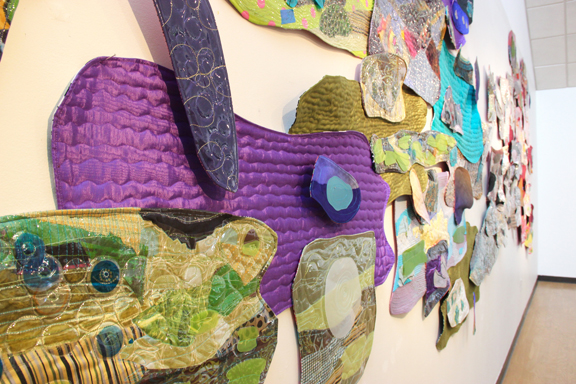
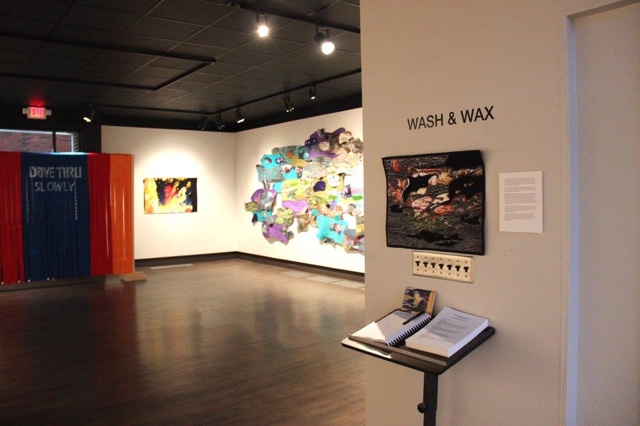
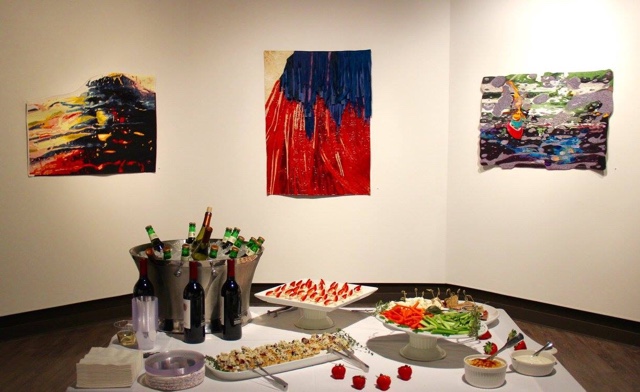
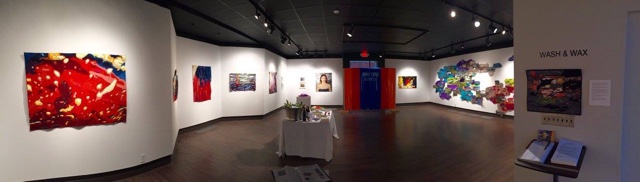
As fate would have it, I was unable to attend the opening reception for Fiber Art Fusion’s Exploring Dimension exhibit. I did, however, visit it with my mother the following week. We also visited the High Museum — and although the visiting exhibit from the Louvre was good, we had seen it before — and the permanent exhibit was, in my biased opinion, not nearly as good as FAF’s exhibit.

I have received permission from some of the artists in FAF to give you a sneak peek — a small tour of the wonderful treasures on display at The Art Place.

This is my piece, The Price of Passage, which I include since I added something since I last took pictures of it. Can you tell what it is?

greaves_price

The Wailing Wall by Denise Webster – Some of the stones have photo transfered pictures on them. There are also little notes tucked into the nooks & crannies between the rocks.

webster_wailing wall

Blue Vessel by Sharon Ahmed

ahmed_bluevessel

Felted Vessel by Sharon Ahmed

ahmed_feltedvessel

Dancing with the Dragonflies by Sharon Ahmed

ahmed_dancingwiththedragonflies

Felted Monsters by Sharon Ahmed – All of these are made with felted wool.

ahmed_feltedmonsters

Do You See What I See? by Wendy Blanton – This is Wendy’s interpretation of a migraine headache – and the black & white road actually protrudes from the eye.

blanton_doyouseewhatisee

Reuse by Julie Kokan

kokan_recycling

Dragon Flight Plan by Margaret Betz

betz_dragonflightplan

Dream Weaver by Margaret Betz

betz_dreamweaver

Treetop Reverie by Margaret Betz

betz_treetopreverie

It Ain’t Over by Rebecca Reasons

reasons_itaintover

Blue Box by Rebecca Reasons

reasons_bluebox

Hawaiian Tea Time by Diane Schulteiss – Diane used watercolors to paint the painting, and then used photo transfer techniques to make her own fabric which she used for the tea set.

schulteiss_hawaiianteatime

Share the Spirit by Diane Schulteiss – This one was difficult to photograph as it has the image printed on organza in the foreground and also printed opaque in the background.

schulteiss_sharethespirit

Ethereal Summer Day by Ann Quandee – This one has a lot of sparkle — as you can tell, my camera and I had a hard time taking a clear picture.

quandee_etherealsummerday

Fairy Grandmother’s Hat by Ann Quandee

quandee_fairygrandmothershat

The Sweet By and By by Ann Quandee

quandee_sweetbyandby

Treasures from the Earth by Ann Quandee – The amoeba shapes in the middle are heavily beaded with seed beads, and the background has handmade utee fabric beads.

quandee_treasuresfromtheearth

Coral Reef Sea Creatures by Hellenne Vermillion – Hellenne made these with pottery, silk, and wool roving. I don’t know that I have seen anyone else merge these kinds of elements together so delightfully.

vermillion_coral1

vermillion_coral2

vermillion_coral3

vermillion_coral4

Sea Creatures Scarf by Hellene Vermillion

vermillion_silkscarf

September 2, 2009

Exploring Dimension

Fiber Art Fusion’s Exploring Dimension exhibit opens tomorrow at The Art Place in Marietta, GA. The reception is 7 – 9pm. I will have my piece The Price of Passage there.

I went to the hanging party yesterday — and it is a stunning exhibit. Margaret Betz and Rebecca Reasons have done an excellent job curating and hanging. Most of the artists in the show routinely work with the quilt as a flat surface. It is fun to see how everyone pushed themselves to create dimensional pieces using fabric. I feel honored to be included with such a talented group of artists.

August 21, 2009

The Price of Passage

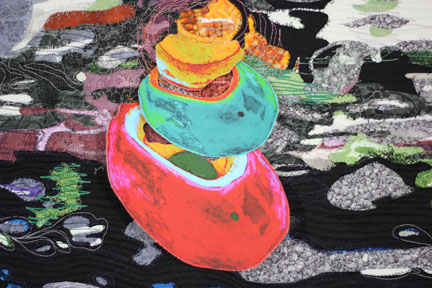
When my art group, Fiber Art Fusion, started talking about making our annual exhibit based on dimensional pieces, I was really excited — but I had no idea what I was going to do. Most ideas came & went, discarded for not being unique enough — and the one idea that stuck was to do a hanging bridge. Most all of my work is flat on the wall — but this would be sculptural using fabric as the primary medium.

So where have I been lately? Working frantically on this. I had most of the summer to think about the project, but very little time to actually work on it, and the exhibit is being hung on the first of next month.

But, thank goodness, I am finally done. It spoke to me today — and said that that was it — add no more.

priceofpassage

It is called The Price of Passage because of the bridge troll. How can you have a proper bridge in the middle of the forest without a troll — and of course, he’s going to expect payment for you to cross it.

I started with the trees. Our group had a great brain storming session with Sharon Ahmed in which she encouraged us to cut up paper and tape it together to come up with unusual shapes. I have also seen Terry Grant do the same thing when she is developing a pattern for a dimensional fabric teapot. At the end of school, I salvaged a sketch book of heavy white paper — most of it unused — and started cutting and taping. It took some time to figure out the size and the repetition of the pieces in order to get a nice round look.

wip1

The first one on the left is my first attempt. Its diameter was too large and even though the paper was folded in the middle, helping to give a nice curve, I knew that wouldn’t translate to Peltex. For the 2nd tree, in the middle, I cut up the left & right halves — and the whole thing looked square. Adding one extra piece was a good idea — but didn’t really fix the problem enough. So for the 3rd tree (3rd times the charm), I drew the pattern with a left & right side & taped 7 of them together to give me a nice round shape. Voila — I had a pattern.

Then I cut out a side from the tree to make a template — fused fabric to both sides of Peltex — and then cut out the template from the Peltex. I wished I hadn’t done that so quickly. I then had to go back & add a fluffy brown yarn to cover the Peltex on the edges. It is much easier to mark the pattern on the fabric, sew the yarn onto the Peltex on that line, then cut it out & cover the edge with more thread. It gives you much better corners. I didn’t do that on the trees — but did remember to do that for the slats on the bridge.

Once I had 14 pieces, I started sewing them wrong sides together with a tight zigzag. This gave me a nice hinge that I think adds to the character of the trees — and it allowed me to sew them together by machine. I also added more fluffy yarn to the edges on the top & bottom of the trees before the final edge seam was sewn to give a cohesive look.

Then I made the bridge slats. They were done like the trees — with a minor change. I fused fabric to one side of the Peltex (which will be the back of the slats), marked the slats with a permanent marker, and then sewed on an O ring to the 2 short sides (thus saving me from sewing through Peltex by hand). Then I fused fabric to the front side of the Peltex and sewed a simple straight line — following the marked lines on the back side — so that I could see where to add the string on the front (I used a brown crochet thread) — which I added with a tight zigzag. The slats could then be cut out and the edges zigzagged with more thread.

Despite my eagerness, I realized at this point that the actual bridge had to be the last thing added. Again, I used a base of Peltex & fabric. By adding the back fabric first, I could sew on the finishing label by machine — and then fuse the fabric to the top.

wip3

Then I took a great mottled blue hand-dyed fabric, covered the back with fusible, scrunched it up, and fused it on the base with lots of wrinkles left on top.

wip5

Then the base had to be quilted. Choosing quilting can be difficult, so I turned to my notebook and starting playing with ideas. (I’m a great fan of Dijanne Cevaal and am a big follower of her quilting techniques — guess it shows.)

wip4

wip6

I don’t have a picture of it, but I used a metallic thread for the waves in the water. It was VERY challenging. I used a 100 Topstitch and really low tension — but it was difficult to keep the metallic thread from breaking when I was free motion quilting through Peltex and four layers of fused fabric.

Then I had to add the trees. No hope at this point but to sew them on by hand. I taped them down so they wouldn’t wiggle too much. I put on one of those sticky “thimble” sheets on my middle finger, but the needle kept puncturing it — and my finger. Then I had to wait & heal a few days.

wip7

When the pain subsided, I added some metallic silver tulle and Tyvek that I had bubble melted and painted pewter.

My final addition before the bridge was the troll. I had been thinking about him all along, and in his first incarnation, he was wired (which was new to me) — but I had to discard him because he was out of scale for the piece. I don’t have a lot of experience making dolls, but after having spent some time reading Susanna Oroyan’s book Anatomy of a Doll, I knew that I couldn’t make too complicated a doll in the size that it needed to be in order to fit the rest of the piece. He also couldn’t be pretty — which was a strange thing for me. As artists, I think most of us try to make our work appealing, but a troll shouldn’t be too appealing. I drew out a main shape which included the legs, a different pattern for the arms, and a side view pattern of the head so that I could give him a nose and chin. He is my first attempt at needle sculpting a doll. He has beads for eyes, perle cotton thread details, gray wool felted on for the beard, and brown eyelash yarn for the hair.

troll

I would have liked him to have been wired and had more detailed hands, but he is very small and for me, it made more since to hinge him with a sewn line for the elbows, legs, and fingers.

The bridge was last. I strung 2 rows of fluffy brown yarn (same used on the trees) through the O rings on the back of the slats. I also added O rings on the side of each tree. Then I tied the string to each O ring — which sounds easy — but getting the tension just right was challenging. Too much pull on one side or the other, and the slats would twist or dip. Once it was done, I had to have handrails, so I added more O rings to the trees & more yarn tied to each end.

The Exploring Dimension Exhibit will be held at The Art Place in Marietta, GA  this September 2009.

July 6, 2009

Happy Dance

For non-quilters, doing the happy dance seems like an odd sounding activity — it just means that we are trying to share our happiness after succeeding in an endeavor, usually entry into a juried quilt show. In my case, I am sharing the love today because I want to share the good news that arrived in the mail this afternoon.

Both of my entries, Adelpho and Unconditional, have been accepted into the International Quilt Association’s World of Beauty exhibition to be held in Houston, TX in October. It is a high honor to have been juried into this show as it is one of the largest international quilt shows — and I am in excellent company.

I am glad that I persisted in entering this show. It took many years of wiping my pride aside after receiving rejections. I have had 3 other quilts there. Nothing last year — but I wasn’t surprised. I just entered one quilt and it wasn’t very good. I made it during my pre-move period and the stress showed in my work. But 2 the year before — and 1 the year before that.

I think my work has changed a lot since the first quilt. I’m still doing portraits, but it’s not monochromatic anymore, and there is more detail in the features. Working in a series has been wonderful and I’ve learned a lot. I never thought that I would work in a series, but there are so many lessons in each piece that progress and show in the next piece.

June 29, 2009

New Art Doll

I haven’t made an art doll in a couple of years. I made several in ’07 to sell at an art fair and I still have a few in my studio that my youngest still loves to show off to her friends. She typically tells them that she can “have one” — just pick one out — and they usually pick Sophie, my first doll. Well, I usually explain very nicely that that isn’t going to happen — and that Sophie isn’t going anywhere since she was my first doll. I tend to be fairly territorial over them because — even though they look like a child’s toy — they are ART dolls and they take some time to make.

Technically, they are mermaids. I haven’t ventured into legs — but I’ve been reading Susanna Oroyan’s Anatomy of a Doll, and I’m beginning to think that anything is possible. I suppose that anything new is scary, but she breaks it down into steps so that it doesn’t seem so overwhelming.

I did break my rule and make a mermaid for the daughter of a friend of mine. She has been the queen bee of the house for a long time, and now she has a new baby in the house that is getting a lot of attention. I had intended to have this doll finished for her before the baby came — but the baby was a couple of weeks early. C’est la vie. But she is ready now. My daughters each picked out a doll for themselves a couple of years ago — although only one took it to her room to keep. I did find it in a toy bin once and reconfiscated it, but she has recently reclaimed it. I have always retained rights to put the dolls back in the studio if they aren’t properly taken care of. But this one, Elisabeth, is on her own. Hopefully, she will help teach her owner that art dolls and babies are fragile and need to be specially cared for.

Elisabeth

June 1, 2009

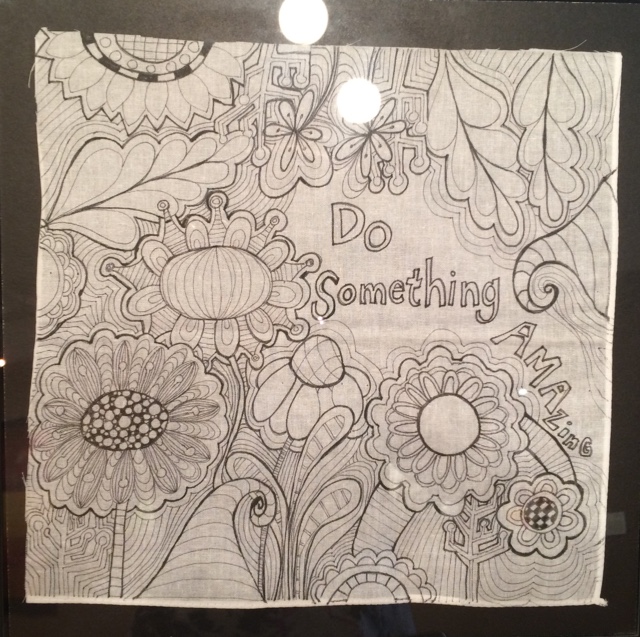
Zentangle Mandala

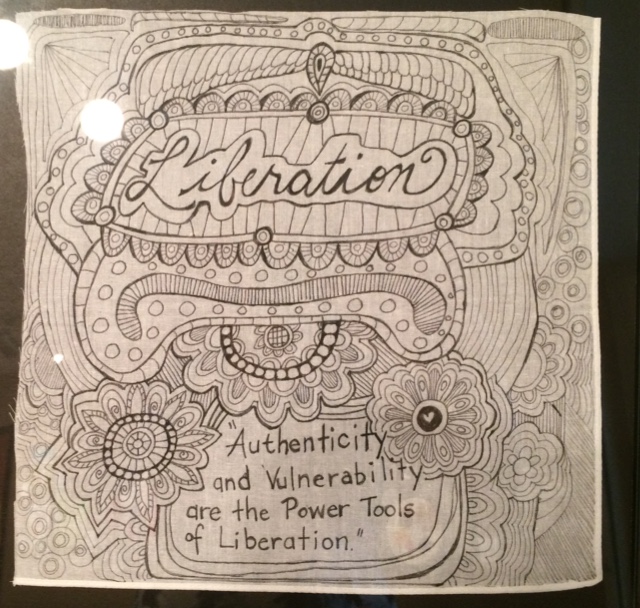
I have been doodling a lot in my drawing notebook with a Sharpie — and it finally occurred to me that I was doing a short version of what is called zentangling. I saw a post about it recently on QuiltArt and was directed to www.zentangle.com. They don’t describe it so much as show you. I started researching and found several videos on YouTube about it — but I am surprised to find that there is currently no Wikipedia entry for zentangle or zentangling.

OK — so what is it? It is a process of doodling that brings about a meditative state. You use heavy white paper and thick & thin black markers — although I’ve seen someone online use black paper with a white marker. If you’ve read Drawing on the Right Side of the Brain — the author talks about reaching the meditative state in drawing that is needed to tap into your best creative energies. Zentangling is an easy way to do this.

So I went to Dick Blick the other day & bought some 80 lb. bright white drawing paper and a couple of Sharpies. That is really all you need — and some time. I had to sit by the pool for a couple of hours yesterday — and it was a perfect activity to keep me occupied. There is a lot of detail in each piece so it takes quite a while to fill one out — but it is also a lot of fun. It seems to take away the pressure of the blank page and lets you experiment with drawing in a non-threatening way.

My first piece is around a circle — so it is technically a mandala — which also helps with the meditation. I had several people who saw it tell me that they would love to see it silk screened onto T-shirts. I’ll have to ask someone if you can create a screen from a Sharpie drawing.

2009-06-01-002_2

I used a plate to draw my circle — and then used wavy lines to divide it into sections that I then filled with circles, dots, lines, squares, diamonds, whatever. It uses repeating patterns to give a sense of rhythm. It is not dissimilar to the process of coming up with quilting patterns to cover background areas.

May 26, 2009

Fending Off Insanity

For the past 3 weeks or so, I have not had a major project. I fnished my last portrait & vowed not to start anything else big. A couple of summers ago, I spent the time staring at a half finished portrait that beckoned to me from the studio — and then strangely, when the summer was over & I had time to spend on it, the muse was almost gone. I had practically finished it in my head and didn’t want to work on it any more. It is nice when you can work with the muse and ride it through a project — and hell when you missed the journey. I suppose I could just lay the work aside and start something new, but I learned from my mom that a professional artist works through blocks.

So I have been having a hard time. Last summer, I laid everything aside. This summer it has not been so easy. The first couple of weeks, I made small things. I made 5 cell phone pouches — I love mine. Made one for me, my mom, my 2 daughters, and my best friend.

Then I saw a great article in the magazine Altered Clothing. Someone had made a bustier using the Chanin style. Chanin is a native Alabamian, like me, and she has a bunch of women in Florence that hand-stitch things like Tshirts and pillows that she sells in New York boutiques. I liked the bustier, but I’m not really the type — I’m more of a T-shirt gal — and I’ve seen Chanin’s work online so I knew that it was just a matter of a few simple materials and some time.

I bought a black & a white shirt from Wal-Mart. I layered the white shirt under the black shirt & then basted them together at the neck & the bottom hem so that the white shirt would peek out. I decided to keep the design simple & traced circles & teardrops onto the front. I used up all of the white DMC floss that I had (years ago I used to cross-stitch) and then bought more — and stitched on the lines with a backstitch. Then I cut out the black just inside the stitch lines leaving the white to peek out from underneath.

I want to say that this is Nigerian applique — but I think that that isn’t technically correct because I don’t turn under the raw edges. Because it was knit jersey, I felt comfortable that it would be OK left alone. When I washed it, I turned the shirt inside out. It came out of the wash fine.

2009-05-26-019_1

Great shirt for little $. I think I’ll make a few of these to wear this summer.

And then yesterday, when I thought that my brain would explode, I pulled out my small drawing pad and a black Sharpie. I realized that I needed to drop the pencil — stop with the hesitation & erasing — and just go. I doodled about 4 pages worth — and it made me feel a lot better.

I think I’m going to start going through drawing tutorials on youtube in the mornings when my kids have swim practice. My muse seems stronger this summer, and bottling her up isn’t going to work — so I’m going to come up with things we can do poolside.

Slideshow

Get the Flash Player to see the slideshow.

Archives


September 2010
M T W T F S S
« Aug    
 12345
6789101112
13141516171819
20212223242526
27282930